Determine your Data Sources and Measurement Tools
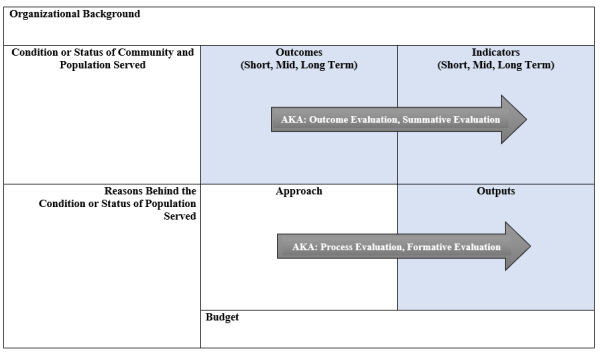
Now that you have indicators and outputs to measure, you have to identify at least one measurement tool for each indicator and each output. There are many tools out there, but the most commonly used tools include:
- questionnaires, surveys, and checklists
- interviews
- focus groups
- documentation review
- mechanical tests
Questionnaires, Surveys, and Checklists
Questionnaires, surveys, and checklists are great if you are looking for an anonymous snapshot from a lot of people. They don’t take a lot of time or money to administer. They are pretty easy to tabulate, compare, and draw information from. And there are many that already exist, so you don’t have to reinvent the wheel.
However, while questionnaires, surveys, and checklists have many advantages, there are a few potential drawbacks. Sometimes people are not honest in their responses. They may intentionally provide you with false answers or they may simply give you the response they think you want to hear. Or they may not be deliberately dishonest; they just don’t put time...