![[current-page:title]](svg/facebook.svg)
![[current-page:title]](svg/linkedin.svg)
![[current-page:title]](svg/email.svg)
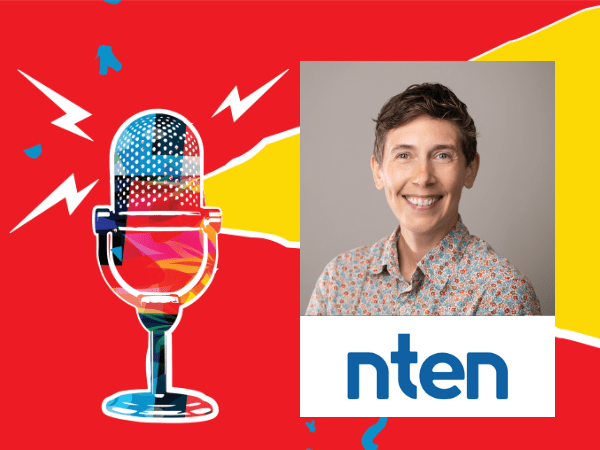
In a world where technology drives nearly every aspect of life, one nonprofit is on a mission to ensure that all organizations—regardless of size or budget—can harness its power to create positive social change. Nonprofit Technology Network (NTEN) is dedicated to ensuring that nonprofit organizations, regardless of their size, budget, or staff, can leverage technology to further their missions. With an emphasis on equitable technology decisions, NTEN helps nonprofits build the infrastructure, skills, and knowledge needed to thrive in this digital world, and NTEN CEO Amy Sample Ward keeps that mission at the center of the organization’s focus.
"NTEN’s mission is simple but impactful," Amy says. "We’re here to make sure that every nonprofit can use technology effectively, regardless of who you are, what your title is, or your background. We want to make sure that everyone can make equitable technology decisions, and we believe that technology should be accessible to all."
NTEN's work revolves around capacity building, training nonprofit staff, and facilitating opportunities for collaboration across various sectors. This support includes providing resources, organizing learning opportunities, and fostering a vibrant community where nonprofits can share knowledge and best practices. Their ultimate goal is to empower organizations to use technology to advance their social missions more effectively and efficiently.
Amy’s journey to NTEN started at a young age. What began as nonprofit work grew into a desire to help people pursue their organization’s mission with technological literacy.
"My first nonprofit job was in high school, working with a domestic violence organization," Amy says. "I was introduced to technology in a way that was really formative. We used Facebook to organize people on campus for the cause. It was all about onboarding non-technical people into the space and teaching them how to use technology to help further the mission."
Their passion for digital content led them to study English and new media in college, where they dove into the complexities of internet content: whose voices get heard, what gets prioritized, and how digital tools could be used to organize communities.
“At university, we explored the idea of using technology as a tool to empower communities, particularly marginalized groups,” Amy says.
After college, Amy went on to work in foundations and other nonprofits, before joining NTEN as their Membership Director.
“I wasn't a member of NTEN at the time, but when I joined the staff, I saw how impactful the organization was in creating spaces for nonprofits to grow and collaborate. Over time, I had the privilege of stepping into the role of CEO, and it's been a rewarding journey.”
NTEN’s impact stretches across various nonprofit sectors. From social justice to environmental conservation, NTEN’s work supports organizations in all areas of impact.
Amy shares that they are particularly drawn to capacity-building work, noting that opportunities for learning and collaboration at the intersections of different groups can be especially powerful.
“There’s something really powerful about when people from different industries and backgrounds come together, learning from each other and truly getting into the work,” Amy says. “It’s a space where ideas can flourish and collaborations can emerge.”
But working in the nonprofit tech space also comes with challenges. One of the most pressing issues, according to Amy, is the lack of funding for capacity-building efforts. That’s where NTEN comes in, helping nonprofits not just get access to the latest tools, but also to build long-term capacity through training, peer support, and resources.
“A lot of funders still focus on immediate outcomes, like direct services or program delivery,” Amy says. “But what is often missing is the investment in building up the infrastructure and skills within nonprofits so they can do the work they need to do.”
One thing that sets NTEN apart from other organizations is its founding ethos and continued commitment to community-driven work. NTEN was created when a group of individuals within the nonprofit sector came together and voted to form an organization.
"The community was very much at the center of that process," Amy says. "To this day, we continue to have that operating approach. If the community doesn’t have what we’re offering, then we change it. The community is a part of everything we do."
This collaborative, flexible, and community-centered approach is core to NTEN’s ongoing success. The organization remains deeply committed to listening to its members and evolving to meet their needs. As the nonprofit tech landscape evolves, NTEN remains a hub for nonprofit professionals to learn, collaborate, and grow.
"One of the most exciting things is seeing how many people continue to join the NTEN community," Amy says. "Every day, new people join, and the resources we offer are available to everyone. Membership is free, and we welcome all questions—whether you're a tech newbie or a seasoned professional. We are all stronger when we come together."
The message is clear: NTEN is a space where nonprofit professionals can find the support and resources they need to make informed, equitable technology decisions. In a rapidly changing world, Amy believes that the key to staying effective and relevant is simple.
"We are all here to learn and grow together,” Amy says. “When we do that, we create a more inclusive, equitable, and innovative nonprofit sector."