![[current-page:title]](svg/facebook.svg)
![[current-page:title]](svg/linkedin.svg)
![[current-page:title]](svg/email.svg)
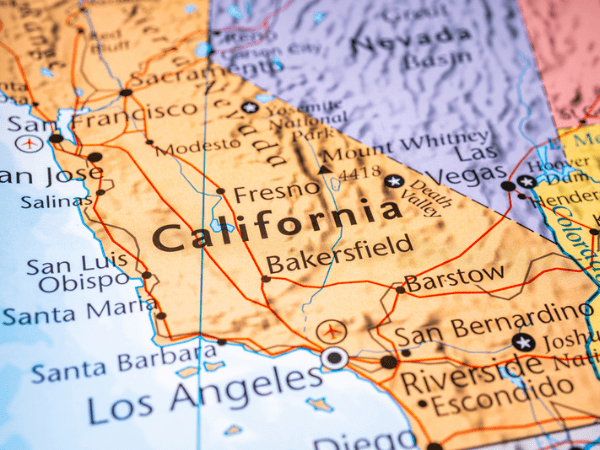
The California wildfires are expected to be the costliest disaster ever to have struck the U.S. The conflagration has incinerated more than 60 square miles of land, more than 17,000 structures, and untold amounts of infrastructure, with a cost expected—according to some estimates—to surpass $250 billion. It's at such times that the public is reminded of the crucial importance of the nonprofit community, as it comes together in affected areas and does some of its most timely work.
Federal Aid Leads the Way
Not only do nonprofits that normally operate in the disaster and recovery space step up, but aid comes from a multitude of other sources as well. The most important disaster response has always been mobilized by the federal government, and it has liberated billions of dollars for new grants and loans in the last month. President Joe Biden, in one of his last acts in office, freed up increased disaster funding by raising the federal cost-share from 75% to 100%.
Two large federal agencies spearhead disaster relief. The Federal Emergency Management Agency (FEMA) divides aid into multiple categories, ranging from preparedness, to hazard mitigation, to the Emergency Food and Shelter Program (EFSB), which disburses through its own auspices, as well as funneling aid to the Department of Homeland Security to help people that agency may encounter during its work. In addition, the Department of Housing and Urban Development offers disaster relief through its Community Development Block Grant-Disaster Recovery Program (CDBG-DR). Other agencies that offer grants include the Department of Agriculture, Department of Health and Human Services, and the Environmental Protection Agency.
This no-strings-attached aid is not only indispensable, but also established practice. Conditional aid, a possibility moving forward, is a phenomenon with the potential to cut both ways, to the detriment of all. Every corner of the U.S. will be struck by future disasters, and with increasing frequency. According to the World Meteorological Organization (WMO), the past fifty years have seen a five-times increase in official disasters, exacerbated by anthropomorphic climate disruption. Medium- and large-scale disasters are projected by the WMO to reach 560 globally a year—basically three every two days—by the year 2030.
A very short list of 2024's declared disasters in the U.S. include the August flooding and November landslides in Alaska; Hurricane Milton in Florida; Tropical Storm Helene in Florida, Alabama, Georgia, and other southern and Atlantic states; October fires in Oklahoma and Arizona; Hurricane Francine in Louisiana; Hurricane Beryl in Texas; two separate wildfire incidents, also in Texas; tornadoes in Ohio; and 160 more events resulting in untold personal losses, countless numbers of displaced people, and billions of dollars of damage.
-min.png)
Nonprofits Converge on California
It isn't just the scale of the wildfires that has shocked observers, but their nature. In the public imagination, fires ravage wooded areas, but driven by high winds the California wildfires have devastated population centers, with flames leaping across wide highways, parking lots, and areas directly adjacent to cliffs and ocean. Even a lifeguard stand on Malibu Beach burned. This doesn't bode well for cities in the era of global heating. But the nonprofit community has leapt into action. Some funders who have lent assistance in California include:
- Direct Relief: This group works in the U.S. and 80 other countries on poverty relief and emergency response. During the wildfires, it sent emergency funding to various frontline organizations.
- Americares: This group works globally, offering medical intervention to everyone from civilians in conflict zones to children in developing nations. It responded to the wildfires by delivering medicine, masks, drinking water, and relief supplies.
- Team Rubicon: This group, headed and staffed largely by military veterans, works globally before, during, and after disaster and was quickly on the ground in California to provide assistance and resources.
- American Red Cross: Its local branches nationwide offer shelter, food, supplies, and assist emergency personnel. In California it has assisted dozens of partners since the wildfires began.
- California Black Freedom Fund and California Community Foundation: These two organizations have jointly created the Black LA Relief & Recovery Fund, aimed at historically Black communities, particularly in Altadena and Pasadena, where the wildfires have caused enormous damage.
- California Fire Foundation: It has provided cash assistance in the form of SAVE cards (Supplying Aid to Victims of Emergency) for help purchasing basic supplies such as groceries, prescriptions, and clothes.
- California Community Foundation Wildfire Recovery Fund: This group, which works mainly in health, education, housing, and immigration, has collected more than $20 million for restoration and rebuilding.
- GiveDirectly: This nonprofit is delivering cash donations in some of the worst hit areas of Los Angeles to individuals who need to pay bills, buy food, and find shelter.
Still more funding and aid sources have been made available thanks to such groups as the Pasadena Community Foundation, Movement Innovation Collaborative, Vétérinaires Sans Frontières (known in English as Veterinarians Without Borders), Los Angeles Regional Food Bank, 11:11 Media Impact, Operation USA, and Project Hope. Lists of organizations offering various types of wildfire relief and information are available from CharityWatch, Los Angeles Times, AARP, and many more organizations.
Help From Disparate Sources
The fact that these wildfires have destroyed every type of structure—churches and synagogues, medical centers, cinemas, historic buildings, restaurants—may have broadened the range of response. Help has come from groups whose remit isn't normally in the area of disaster relief. The government-funded Small Business Association is offering low interest loans up to $100,000 to homeowners and renters, with additional funds available for personal property loss. Restaurants Care has created a fund for food and beverage workers. The Jewish Free Loan Association LA has created a program of emergency loans. The AIDS fundraising group Broadway Cares, the concert promoter and ticket seller Live Nation, and the American Society for the Prevention of Cruelty to Animals have also pitched in.
There's virtually no industry, from traditional and new entertainment, to aerospace, that doesn't have a footprint in Los Angeles and is either giving to nonprofits or staging its own programs. The fashion sector has stepped up. Benefits, giveaways, and support for disaster relief were staged by 12th Tribe, Alice + Olivia, Alo, By Rosie Jane, Set Active, and many other labels. Designer brands COOFANDY, EKOUAER, and Zeagoo launched clothing aid campaigns through their websites and social media platforms. The golf equipment brand PXG made a matching pledge to Team Rubicon of up to $1 million. Even the personal defense technology company Byrna is donating proceeds to wildfire recovery groups.
Some of the largest tech and tech-adjacent companies in the world have also given. YouTube and Google are throwing in $15 million to such organizations as Emergency Network Los Angeles, the Center for Disaster Philanthropy, and the Institute for Nonprofit News. Amazon has pledged $10 million for wildfire relief. And none of this even takes into account the cash given by individual donors, particularly celebrities with ties to Los Angeles. Amongst the list are Taylor Swift, The Weeknd, Leonardo DiCaprio, members of The Eagles, and Eva Longoria. And you can add to this a dozen Los Angeles professional sports teams, including the Lakers, Sparks, Dodgers, Clippers, Chargers, Ducks, and Kings.
Southern California's Future
Despite all these contributions, more money will probably be needed to facilitate Southern California's recovery. There are currently questions whether up to $10 million in wildfire aid approved by the U.S. Department of Labor in the first half of January will make it to stricken communities. In addition, there are questions whether FEMA will suffer budget cuts. In any case, thought must be given to what shape any rehabilitation in Southern California will take. Defiant declarations to rebuild are normal, but simply rebuilding without consideration given to climate resilience in an era that has seen wildfires strike from Hawaii to Florida is probably not the answer.
But what's clear is that the diversity of funding mobilized mirrors the economic diversity and power of California, which, if it were a country of its own, would possess the world's fifth largest economy, ahead of India, France, and the U.K. While these deadly wildfires have elicited little empathy in some quarters, as goes California, so goes the United States. The response of nonprofits and other entities is a reminder that often we can be at our best when circumstances seem to be at their worst. This is a quality we celebrate in the nonprofit community, and it's something to be remembered, not just during disasters, but at all times.