![[current-page:title]](svg/facebook.svg)
![[current-page:title]](svg/linkedin.svg)
![[current-page:title]](svg/email.svg)
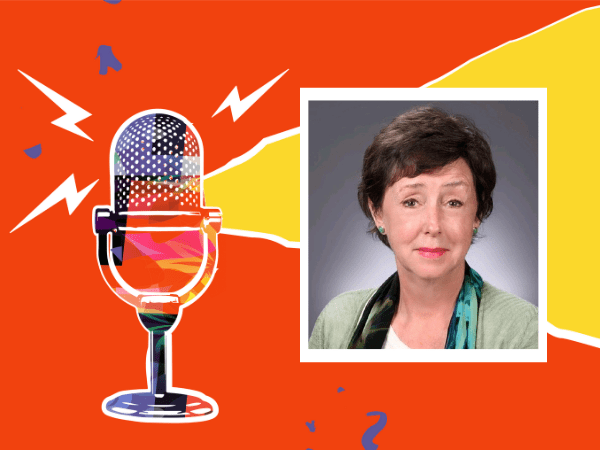
For decades, Gayle Samuelson Carpentier has been helping shepherd organizations into the future of digital technology.
“In my career at TechSoup, I’ve gotten to watch adoption for everything from the internet to faxes, cloud storage and CRMs. The first people are the self-selectors, then you get the next people excited, it gets more mainstream, and then it’s primary for everyone.”
In her newest endeavor, AI for Nonprofits, she’s helping organizations explore how they can maximize resources by getting ahead of the latest technology revolution (without sacrificing the human touch).
A Lifelong Drive to Help
Carpentier, now in her late 60s, has enjoyed a career full of the same twists and turns familiar to everyone.
“My very first job was in a nursing home,” she shares. “And it always stuck with me that, no matter where my life has taken me, there’s always somebody that needs help.”
After graduating in 1977 with her BS in journalism, she quickly found her way into sales: first with a gold and jewelry company, and then as the director of marketing for the San Francisco Business Times, the Healthcare Forum Journal, and then as the co-owner of a yacht charter company.
“I only started getting my footing in my 30s. I found that I had an interesting ability to put different components together and find where the win is.”
TechSoup: Twenty Years at the Nexus of Corporations and Causes
In 2001, Carpentier joined CompuMentor, a small California nonprofit which would eventually become TechSoup. And at the time, it was a modest operation with a handful of donors and an even smaller staff.
“When they brought me in, I thought, ‘bringing technology to nonprofits? I can work with that.’ They never have enough money or staff to do everything they want. Maybe we can help.”
The forefront of technology was quite a bit different back then. People were still installing programs from CDs, and the questions Carpentier fielded from curious adopters may sound a bit quaint by today’s standards.
“What do you do when your computer is covered with dust? Is it safe to turn on? That’s the kind of stuff that we wrote about.”
Carpentier’s efforts were wildly successful — by the time she moved on in 2024, their partner network served 236 countries and territories around the world. Her triumph reflects the same philosophy she’s carrying into AI for Nonprofits: meet organizations where they are.
“A lot of people would give nonprofits great big volumes of information all at once. But they can’t go from one to five overnight. They’re focused on their mission and the beating of their heart. Technology can empower that, but you have to move at their pace.”
Actionable Tips for AI Adoption
Just 6% of nonprofits consider themselves experts and over a quarter aren’t using AI at all, according to a recent Tech Soup Survey of ~1500 organizations. While many are becoming more familiar with it, the industry is still in the early stages of adoption.
The number of AI applications — from graphic design to writing or even agents that can act on their own — can seem overwhelming. But if you’re in the early stages of experimenting, using ChatGPT to enhance the number of grant applications you can write is a great place to start.
Here are a handful of tips you can implement today:
- Start with a detailed prompt: Give the AI as much context as possible: what you’re writing, who it’s for, and what you want to achieve. The more information you provide, the better the results.
- Give it rich inputs: Attach past proposals that have been accepted, as well as grant applications from other organizations that have been successful. Include brand messaging documents, annual reports, and any other primary information you have access to. Effective prompts can be paragraphs long and include multiple attachments.
- Define your audience: Who are you writing for? What do they care about? What can you say about their mindset, beliefs, and values? The best outputs are specifically tailored to the people you are trying to communicate with.
- Return to old chats: Every time you start a new thread, the AI’s memory resets (and you have to start over). Having dedicated chats — one for content marketing and another for grant writing, for instance — is an effective time saver.
- Treat it like a brainstorming partner: Chats can run hundreds of messages, so use the space. It’s a great sounding board for when you’re stuck and can help refine ideas or explore new directions.
- Add your unique human touch: AI-generated text can be pretty generic, and you’ve probably developed an eye for it already. Once you have a draft, add your own voice, perspective, and tone before submitting.
- Verify everything: Hallucinations are common. Even when you give it access to source material, it can still make up information. Follow the old saying: trust but verify — or better yet — distrust and verify.
And remember, like everything else, practice makes perfect. The more you use AI, the better you’ll get at prompting it, and the faster you’ll reach usable drafts.
Asking the Hard Questions About AI
One of her greatest fears? That nonprofits lose the human voice that makes their work meaningful.
“What troubles me is we can get to a beige version of the planet. If twenty people use the same prompt to write a grant and they all start to sound identical, how do you make an assessment against that? What are the ethics of how much must be in your own voice?”
Carpentier’s career has always balanced optimism with realism; technology should serve people, and not the other way around. Perhaps the best advice is to start small, stay curious, and never lose sight of the human heart behind every innovation.
Check out GrantStation's TargetEd webinar series for guidance on ethical AI practices for nonprofits:
- Human-Centered AI: Aligning Technology with Your Mission – Dec. 1, 2025
- Creating AI Policies for Your Organization – Dec. 8, 2025