![[current-page:title]](svg/facebook.svg)
![[current-page:title]](svg/linkedin.svg)
![[current-page:title]](svg/email.svg)
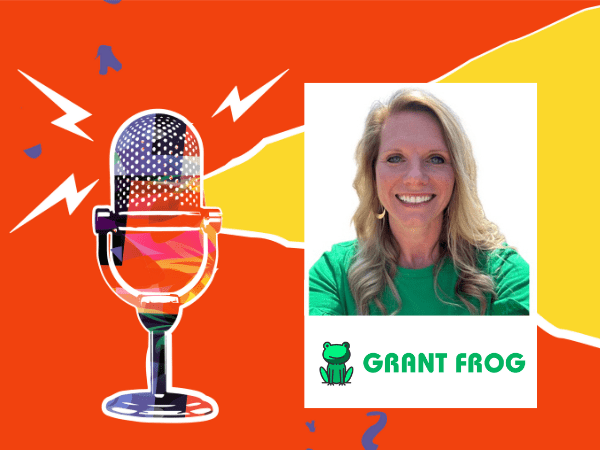
When Hannah Wiginton started her nonprofit career, she didn’t intend to start a business. She just wanted to help.
“I’d never written a grant before,” she recalls. “But I thought, ‘I have a bachelor’s in communications, I know how to write, so surely I can be helpful.’”
Her instinct proved correct — fifteen years later, she manages a nonprofit’s grant program, coaches other fundraisers, and founded Grant Frog, a software platform built by and for the people doing the work.
But it didn’t emerge from a whiteboard session or venture pitch deck. It came from necessity.
“I started with a spreadsheet, just like everybody else,” she says. “And then I realized that if you want to scale up and send more requests, and do the follow-up reporting year after year, it gets out of hand pretty quickly.”
She started with a personal database as a way to stay sane. It kept her organized, and made sure no deadline or reply fell through the cracks. And eventually, she realized she wasn’t the only one drowning in a tangle of tabs, task lists, and spreadsheets, so she turned her DIY tool into a public platform.
Scaling What Already Works
Today, Grant Frog is a lightweight, centralized way for nonprofits to track proposals, assign tasks, collaborate, and coordinate reporting requirements. Think of it as a CRM, calendar, and compliance checklist rolled into one, designed specifically for how grant writers actually work.
“You don’t get automated reminders from a spreadsheet,” she says with a laugh.
She used her experience in grant writing as a foundation. Then, with feedback from other writers, teams, and consultants, she incorporated everything into all the little details that make the platform shine.
“We started with a database, and then transformed it into something more comprehensively helpful. We push new features once or twice a month, and most recently, that’s been some AI and a way to help with foundation research.”
Witnessing Funding Volatility First Hand
Planning for the long term is more important than ever in 2025, as many nonprofit leaders adjust to the aftershocks of rescinded federal grant opportunities.
Wiginton has witnessed the fallout firsthand.
“I spoke with someone the other day. They were in the middle of working on a new federal grant, logged in, and discovered it was just completely gone. Not only were they hoping for funds, but then they’ve spent all this time and effort on an application for it to just get pulled with no notice? That’s really disheartening.”
Unfortunately, she’s heard versions of that story again and again in recent months. But hearteningly, nonprofits are adaptable.
“A lot of people are looking for funding from private or corporate foundations now.”
More Than Just Writing Support
“Grants aren’t a quick win. They’re not just a way to get money in the door. It’s an entire process. They should only be a piece of your diversified income and revenue, and when you’re ready to apply, make sure your organization is ready to support that grant from beginning to end."
That perspective makes Grant Frog more than just another tool. It’s a reflection of her experience in the field. She understands grant writing is a slice of a much larger picture, and developed her platform to support that reality.
“I think of grants as a seven-step process. You start by making sure you’re actually ready for funding. Can you report? Can you scale? Then you research grants, build funder relationships, and then you write. After that, it’s about managing, reporting, and stewarding the partnership.”
Transformation, One Person at a Time
When asked about the most rewarding aspect of her work, Wiginton doesn’t mention revenue, metrics, or growth. She talks about relationships.
“I’ve made so many friends through this,” she says. “There are just so many people with good hearts doing good work out there.”
And, of course, she enjoys helping her friends.
“I worked with a woman recently, and she had a spreadsheet that was just all over the place. So we worked together to clean it up, put everything into Grant Frog, and now she uses it for both her nonprofit and consulting work. It completely changed her process and made it so much easier to manage.”
That moment of transformation — from chaos to clarity, anxiety to ease — is why Wiginton keeps building. She talks to customers, figures out what they need, and pushes new features as often as she can.
But through all the upgrades and development, her goal remains the same: help people do their jobs better, and with less stress.