![[current-page:title]](svg/facebook.svg)
![[current-page:title]](svg/linkedin.svg)
![[current-page:title]](svg/email.svg)
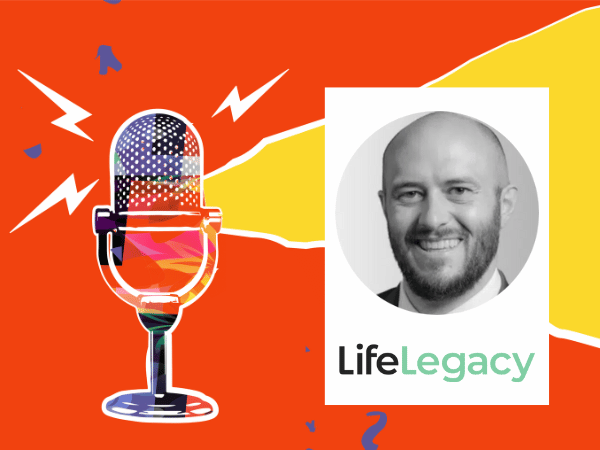
Jordan Cassidy, co-founder of LifeLegacy, has an approach that may help.
“Wow, we just got a quarter-million-dollar check from someone we never even asked to leave us in their will. What if we talked about this more?” Cassidy says, illustrating the transformative potential of legacy giving for planned giving campaigns.
It’s a touchy conversation. You’re not going to bring up wills with people you’ve never spoken to before. But for organizations with long-term donors? Absolutely worth exploring. “Someone who gave consistently for seven years? Or gave seven or more times in the last ten years? That’s someone who would likely want to include you in their plans,” Cassidy explains.
Better yet, legacy giving can benefit small and large organizations alike and isn’t as difficult to incorporate into your funding mix as you might think.
LifeLegacy specializes in helping nonprofits build the foundation for planned giving campaigns, ranging from training to outreach resources, teaching on how to tactfully discuss legacy giving, and technical support.
He’s helped thousands of people leave meaningful bequests to the organizations they care about and may be able to help yours, too.
From High Finance to Social Impact
Cassidy began his career as a stockbroker at Charles Schwab, before moving into risk management and corporate insurance. Through these experiences, he witnessed philanthropy from the donor’s side of the table.
“I saw that a lot of organizations I worked with really succeed when they had a planned giving program in place.”
If his early career planted the seed, his father’s passing provided the water.
“My father was very involved with Boys and Girls Clubs and a variety of nonprofits throughout his life. But at 37, he was diagnosed with a brain tumor and passed away. Seeing his involvement in philanthropy, and the legacy he left, inspired me to bring those two worlds together and start LifeLegacy with my brothers.”
The Case for Legacy Giving
Cassidy points out that while many organizations are forced to focus on immediate needs, planned giving provides stability difficult to match through other avenues.
“Every organization should be in this space,” he says. “The great wealth transfer is here, and talking to people about how they can leave a legacy with that wealth could be hugely impactful. But if you’re not asking for it, you’re not likely to get it.”
The best bet is to start simple.
“It’s not about going all in right off the bat. Most planned gifts tend to be from people penciling you into their wills. This isn’t an ask that’s going to change their financials. It’s an ask for the future. So for now, just get something up on your website to show that you can leave planned gifts.”
How to Talk About Legacy Giving Without Talking About Death
One common hesitation is the discomfort of talking about estate planning. Cassidy acknowledges that fear but advises reframing the conversation.
“It’s one of the most fulfilling conversations you can have,” he says. “You’re helping someone think about the good they want to leave behind.”
LifeLegacy holds trainings throughout the year and even provides sample outreach material for people who want to learn how to hold legacy conversations with donors.
“We’re not saying ‘when you die, leave us in your plans,’ right? What we do talk about is the impact people can make and provide them a way to leave that legacy behind.”
Actionable Steps for Getting Started
A lot of organizations have websites, but the only thing donors see is a “give now” button. So, perhaps the easiest way to begin is by creating a space on your site that says you have a planned giving option in the first place.
“For a lot of folks, cash is actually a very small portion of their assets. You’ve got stocks, you’ve got retirement plans, and if they have a will, they can lay out what they want to happen after they’re gone.”
Next, it’s best to identify your most engaged supporters. People who donate regularly over many years are deeply connected to your mission, and most likely to include you in their plans.
From here, it’s about incorporating planned giving into your messaging.
“You want to reach out about it 4-6 times a year. That’s a nice number to consider. Because you never know when a person is about to write their will. Your email may come at the right time, they talk it over with family over dinner and decide to put your organization into their plans because they care about you.”
Remember to talk about impact rather than mortality. Over time, it can be helpful to develop legacy stories from past donors, demonstrating the impact their gift made on your organization and your ability to fulfill your mission.
And finally, Cassidy advises remembering where your role ends. Focus on education and inspiration, and let financial planners and estate planning attorneys take it from there. “You want to be there to help with a tax ID or employer identification number, but at the end of the day, we’re fundraisers. Let other professionals handle their side of things.”
Building a Legacy That Lasts
Five years after launching, Cassidy’s mission has scaled dramatically. The company now partners with thousands of churches, humane societies, and community nonprofits nationwide.
“Something I’ve learned is a lot of nonprofits are looking for ways to grow, expand, and increase their revenue. Legacy giving is a low lift, easy entry way to do that and also one of the highest ROI fundraising investments you can make.”