![[current-page:title]](svg/facebook.svg)
![[current-page:title]](svg/linkedin.svg)
![[current-page:title]](svg/email.svg)
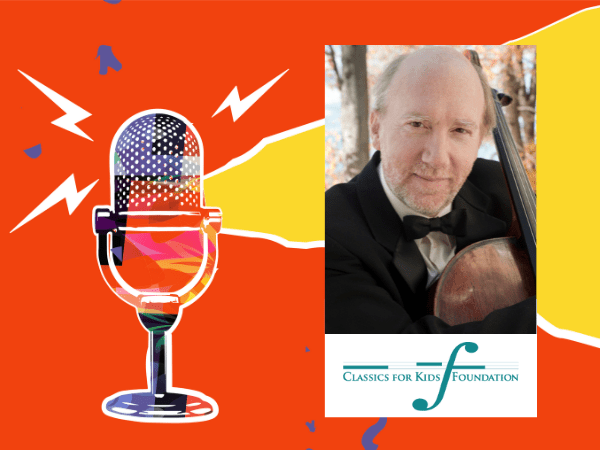
In a world where the arts often take a backseat to budget cuts, Michael Reynolds has carved out a powerful niche for himself—supporting music education for underprivileged kids through his nonprofit, the Classics for Kids Foundation. Since its inception in the late 1990s, Michael’s vision has been simple yet transformative: provide matching grants for high-quality string instruments to organizations serving at-risk youth across the United States. The organization’s focus on string instruments, from violins to cellos, is not only unique but also plays a critical role in keeping young people engaged in something positive.
“Whenever you have a budget situation in a public school setting, one of the easiest things to cut is music,” Michael says. “More often than not, it’s the string program that’s cut, rather than the band program. You need a band for marching band and football games, but string programs are, to some, a bit more esoteric.”
Michael’s background in music has been both diverse and deep. He grew up in Bozeman, Montana, a small town that wasn’t home to an orchestra program—something his parents sought to change. His mother, a concert violinist, and his father, a violist and the head of the music department, both shared a strong entrepreneurial spirit that led them to start a symphony orchestra, an opera company, and an orchestra program in the local schools. Inspired by their dedication, Michael followed his own path as a concert cellist and later as the founder of the Classics for Kids Foundation
Michael is no stranger to the challenges of nonprofit work. Raising funds for the organization has been a particularly tough hurdle.
“Raising money is the hardest part, especially when you’ve never had public funds,” Michael says. “But over time, we’ve learned how to effectively ask for support. I tell my students, ‘I want to give you the opportunity to support something important.’ It took a while to figure out the right way to say it, but we’ve been fortunate to have strong private support and several grants from major foundations.”
With a commitment to quality and sustainability, Michael has ensured that the string instruments provided through his program are built to last.
“We want to make sure that the organizations we support get quality instruments,” Michael says. “String instruments are fragile by nature, so we need to ensure that they hold up over time, especially across generations of young hands.”
What sets the Classics for Kids Foundation apart from other initiatives is its singular focus on string instruments for at-risk youth. While many organizations provide general music education, none quite match the depth and dedication Michael has put into making string programs available in a variety of settings.
“We serve all kinds of communities: public schools, private and faith-based schools, after-school programs, even symphony orchestras launching initiatives,” Michael says. “We’ve seen a tremendous growth in programs targeting at-risk kids, and we’re proud to support them.”
As the founder and director, Michael juggles a heavy workload. He is also the director of the Music School at Boston University and a professor of cello. Yet he has found a way to keep things simple. With his hands full, Michael takes pride in personally overseeing the application process, reviewing proposals, and making recommendations to the board, which decides which programs to support.
“I wear a lot of hats,” Michael says. “But what we do at Classics for Kids is simple. I don’t need an office. It’s me, my cell phone, and my laptop. That’s our business model.”
Though the work can be demanding, he finds meaning in the impact it has on children’s lives. “There are a lot of different ways to be at risk,” Michael says. “In rural communities, you might be dealing with tough economic indicators—former factory towns, areas with high unemployment. In urban centers, you often find programs in areas with high crime. But what’s common across all these communities is the need for arts programs that offer a positive outlet for young people.”
The success of the Classics for Kids Foundation has been about much more than just offering instruments. It’s about creating opportunities for kids to grow, build relationships, and engage in diverse, culturally enriching experiences through music.
“A big part of what we support is the social and educational benefits of these programs,” Michael says. “It’s about helping kids develop healthy relationships with their peers and interact with culturally diverse communities.”
Michael’s journey reflects the passion of a man who not only believes in the power of music but in the transformative potential it has for kids who need it the most. Through the foundation, Michael has created a lasting impact, one string instrument at a time.