![[current-page:title]](svg/facebook.svg)
![[current-page:title]](svg/linkedin.svg)
![[current-page:title]](svg/email.svg)
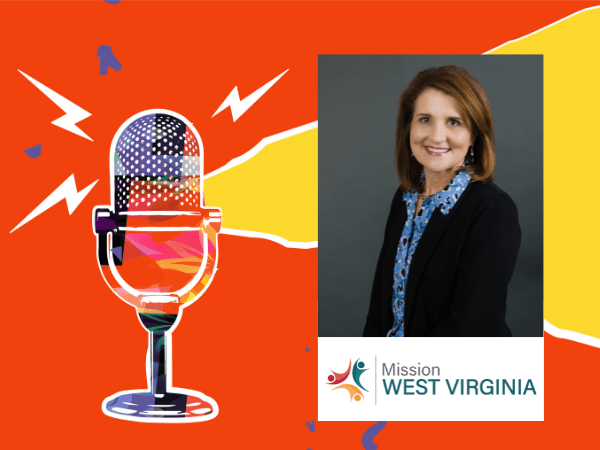
In a sector often driven by urgency and rapid response, Kelly Thompson has taken a different approach—one rooted in long-term sustainability, mission fidelity, and organizational strength. As the Executive Director of Mission West Virginia, she has spent nearly 24 years ensuring that the organization not only meets the needs of youth and families in the state, but does so with consistency, care, and a clear sense of purpose.
Mission West Virginia is a statewide nonprofit that supports youth and families through a blend of education, foster care support, and mentoring programs. The organization operates with the belief that lasting change starts with informed decisions and strong, stable systems. Its two flagship initiatives—“THINK” and “FrameWorks”—speak to this philosophy.
THINK is a health education program that equips middle and high school students with knowledge around pregnancy prevention, sexual health, and making positive decisions for their futures. FrameWorks, on the other hand, focuses on the foster care system—recruiting and supporting foster and kinship families, identifying permanent placements for children in care, and offering academic mentoring to help youth in foster care graduate from high school and pursue opportunities beyond. These programs reflect Mission West Virginia’s commitment to both prevention and intervention.
“We are focused on creating better futures for young people,” Kelly says. “Whether that’s helping them make smart choices early on, or supporting them through the more complex realities of the foster care system.”
Kelly’s own professional path began in direct social work. With both bachelor’s and master’s degrees in the field, she initially specialized in micro-level services, working one-on-one with children and families. After six years in that space, she joined Mission West Virginia in 2001 to lead a faith-based foster care recruitment initiative. What began as a focused program role soon evolved into a deeper interest in the systems and structures that support—or hinder—nonprofit service delivery.
Over time, Kelly came to see that change at scale often requires more than direct service. It requires strong organizations with clear missions, smart strategies, and stable infrastructure. That realization led her to study nonprofit management, equipping herself with the tools to strengthen not just programs, but the organization behind them.
Today, as Executive Director, Kelly’s work touches nearly every aspect of Mission West Virginia’s operations. Her responsibilities range from program development and contract oversight to strategic planning, staff training, and internal policy design. She also plays a key role in cultivating partnerships across sectors, engaging with community stakeholders, government agencies, and peer nonprofits to expand the reach and impact of the organization’s work. No two days are exactly alike, but her role is consistently anchored by one priority: building the organization’s capacity to serve.
“Much of my job is making sure our staff has what they need to succeed,” Kelly says. “That might mean providing training, developing new procedures, or simply being available to troubleshoot challenges as they arise.”
This internal focus has paid off. Over the past decade, Kelly has led Mission West Virginia through a process of strengthening foundational elements—from governance and financial management to HR systems and communications. The result is an organization that’s better positioned to adapt to external change, particularly the unpredictable nature of government partnerships and policy shifts.
“External systems are often outside our control, and they can shift quickly,” Kelly says. “But we’ve learned not to overreact. If your internal systems are strong, you can navigate those changes more effectively.”
This level-headed, systems-based leadership has helped the organization remain steady through changes in administration, funding climates, and social policy. While Mission West Virginia continues to evolve its programs and partnerships, its strategic direction remains clear—stay mission-aligned, invest in what works, and don’t overextend.
Kelly is also a strong advocate for intentional partnerships. She sees collaboration not as a buzzword, but as a critical ingredient for success in the nonprofit space.
“We can’t do this work alone,” Kelly says. “Sustainable impact often depends on working with others, whether that’s a government agency, a school system, or another nonprofit organization.”
Another principle that guides her leadership is a healthy skepticism toward the pressure for scale. While large numbers can be impressive, Kelly emphasizes that success is not always about volume.
“Sometimes the most meaningful outcomes come from a single interaction,” Kelly says. “A mentoring relationship, a family placement, a classroom session that sparks a new understanding. Impact doesn’t always come in triple digits.”
That perspective has helped shape a culture at Mission West Virginia that values both measurable outcomes and the human stories behind them. Staff are encouraged to share successes, however small, and to stay focused on the long-term impact of their work—even if results take time.
Looking ahead, Kelly remains focused on strengthening the organization’s infrastructure, improving internal morale, and expanding communication efforts to further engage the community. With a solid foundation in place, she believes Mission West Virginia is well-positioned to deepen its impact in the years to come. Her approach offers a valuable reminder: mission-driven work requires more than passion. It demands patience, structure, and a deep commitment to building something that lasts.