![[current-page:title]](svg/facebook.svg)
![[current-page:title]](svg/linkedin.svg)
![[current-page:title]](svg/email.svg)
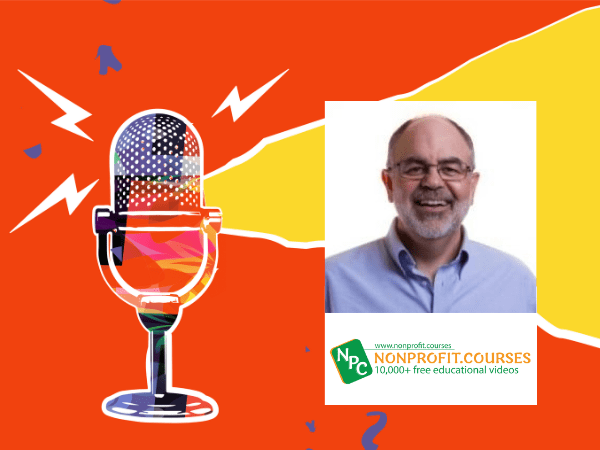
Imagine visiting office hours in undergrad with a question. Your professor is an experienced hand with gray hair, but hasn’t let the times pass him by. He weaves jokes into stories that stick long after conversations are over, and his warm presence puts you at ease to ask anything at all.
That’s Matt Hugg.
As the founder and curator of Nonprofit Courses, he’s built one of the largest collections of free training content on the internet, covering everything from grant writing to board governance, volunteer management, and more.
For nonprofit professionals, it’s a one-stop shop to find the answers they need, when they need them.
“I’m not going to tell you how to save the whales,’ Matt says with a grin. “But I’m going to tell you all the things you need to do so you can save the whales.”
A Global Educator
After earning his Master's in philanthropy and development, Matt’s teaching took him far from his Philadelphia home. Through partnerships with World Vision and Habitat for Humanity, he’s taught everywhere from Senegal, Uganda, Cambodia, and Italy, to Washington DC, and New Jersey.
If you were in school during Covid, his approach will feel familiar: lectures, papers, and YouTube videos to emphasize key concepts. “Most of my courses were hybrid. We’d teach for three weeks in person, and then do the rest online over the year.”
However, finding good online material to reinforce lessons with was frustrating.
“There’s a lot of great video content out there, but it’s really hard to find. You’d have to search YouTube or Google, and usually you get the big-name people, but they aren’t the ones with the best content.”
Then one day, he was browsing GoDaddy for website domains, and an idea struck him: “nonprofit dot courses isn’t taken, what if I brought all the best experts and their content together in one place?”
And thus, Nonprofit Courses was born.
Seven years later, his site houses more than 12,000 videos from over 200 experts, consultants, trainers, and organizations sharing their expertise through free and paid resources. About 85% of the content is completely open-access, with no paywall or membership required, while the rest is available for a fee. Topics cover the full spectrum of nonprofit management training, and to make navigation easier, Matt created “focus pages” that act as gateways to specialized resources.
Meeting Nonprofits Where They Are
Working professionals learn differently than students, with many watching videos in the margins of the day: between appointments, in the car, or even while doing the dishes. That’s why he encourages experts to keep videos short.
“I’ve learned that less is more. Break it up into digestible segments. Someone may want to learn about annual funds, but already knows how to write the letter. Piece it out so they can find exactly what they really want.”
Keeping the site open-access and on-demand is a core value as well. He knows for many small or startup nonprofits, even modest fees can be a barrier. It makes monetization tricky – but he sees it as essential to the site’s mission.
“It’s about looking at it from the nonprofit’s point of view,” he says. “I’m not going to put up barriers for them to get to this stuff. If your board asks for a planned giving proposal by next week, you can’t wait until a conference two months from now.”
He’s also found certain topics draw a surprising amount of interest. Fundraising is always popular, but accounting content is consistently among the most viewed. He joked that it’s because “people don’t want to go to jail.” However, he truly sees it as a sign that leaders are taking financial stewardship seriously.
The Most Rewarding Feeling
For Matt, the joy is twofold: discovering weird niche content that’s hard to find anywhere else (like training for thrift store operators on how to find affordable inventory they can sell) and hearing from people who say they found exactly what they needed on the site.
“When people say ‘hey, I saw that video, it was really good, I wish I had known this earlier,’ that’s really gratifying.”
As Nonprofit Courses grows, Matt’s biggest challenge is getting the word out so professionals know the resource exists. But for now, he’s content to keep curating content, teaching at Thomas Edison State University, and connecting people with the knowledge they need to make an impact.