![[current-page:title]](svg/facebook.svg)
![[current-page:title]](svg/linkedin.svg)
![[current-page:title]](svg/email.svg)
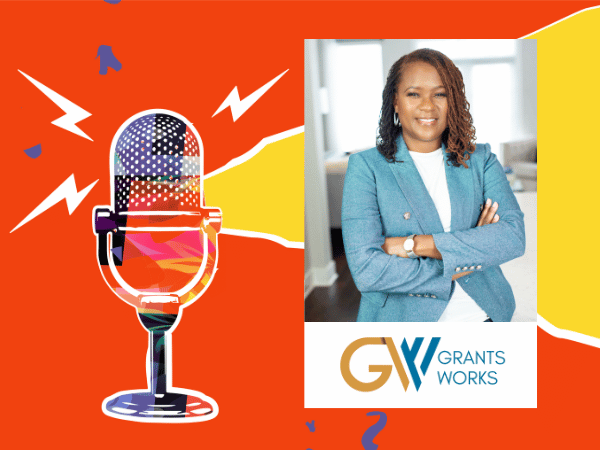
When people talk about grants, they usually focus on how to win them: crafting the perfect narrative, aligning with a funder’s priorities, and hitting application deadlines.
But Patrice Davis, the founder of Grants Works, helps solve that challenge as well as the next one — what happens after the award?
“For a lot of people, the only grant professionals they know are grant writers,” Davis says. “But there’s also this whole set of other professionals that focus on adhering to award terms.”
Leveraging her career as a grant compliance official at the Jimmy Carter Foundation, the Boys and Girls Club of America, Georgia Tech, and others, she leads with value, education, and strives to help organizations understand how to keep the grants they’ve worked so hard to earn.
Addressing the Challenge of Post-Award Compliance
After an organization receives a grant, there’s a new challenge to overcome: project management.
“Maybe they’ve always relied on foundation grants, and all of a sudden, they have this big grant from HUD. To embed compliance into their work, they have to refigure the way they interact with colleagues. Instead of sending one report a year to a foundation, they’re having to coordinate and collaborate across teams to make sure financial oversight is a key in their day-to-day decision-making process.”
Rather than scrambling, Davis encourages organizations to build proactive systems that help them stay audit-ready. That means thinking about things like time tracking, reporting procedures, and how you define direct and indirect costs before an application process even begins.
Navigating a New Funding Landscape
Recent changes have forced nonprofits to diversify their funding portfolios. Some are stepping up direct donation programs or program revenue, while others are looking to private foundation grants. Nevertheless, there’s still good reason to apply for federal grants.
“Even though there are cuts left right and center, federal funding is still some of the best you can get. It’s typically larger, often multi-year, and comes with an opportunity for renewal. Organizations can and still are pursuing federal grants.”
But due to President Trump’s philosophy, the way to apply and comply with funding guidelines has evolved. Her expertise is more important now than ever.
“With everything that’s changing, we felt that our role was to bring some clarity. Organizations have to make sure they can never be accused of waste, fraud, or abuse.”
The 250 or so trigger words the new administration doesn’t want to see in applications can be tricky to work around. However, with some creativity, it’s still possible to stay true to your mission without straying from their guidelines.
“Funnily enough, words like female are on the list. So if I were a nonprofit agency that developed a housing program to serve women, how would I reword my application to avoid that? It’s specific to the program and what they’re offering, but one thing I’d ask is whether the shelter is in a rural community.”
It’s also important to pay attention to what’s happening within specific agencies.
“For example, the US Department of Health and Human Services is undergoing massive reconfigurations. They’re reducing the number of regional offices, divisions, and the number of other agencies they’re operating with.”
Keeping up with the deluge of news can be challenging, especially for professionals juggling the many needs of their organizations. That’s why Davis started the Federal Grants Explained YouTube channel, where she provides in-depth information (without the jargon) about the latest grant news coming out of Washington.
Meeting Organizations Where They Are
Many nonprofits are hard-pressed to hire a consultant or in-house specialist to manage a program on their behalf. It’s too expensive.
That’s why, even though Grants Works provides hands-on support, they’ve also developed training programs specifically to equip in-house teams with essential skills.
“This was a particularly fulfilling project. Early in the business, when I was the only person on the team, we were hired to develop a custom federal grant management training series. About 900 people have been through it now, and afterward that same organization came back and said, ‘This is going so well, could you translate the entire thing into Spanish?’”
A Word of Advice
Keeping a nonprofit financially healthy will always be a challenge. But even when budgets are tight, Davis underscores the value of investing in a post-award manager.
“Your writer needs breathing room to find well-aligned opportunities, and keep funding coming in. So it’s important to focus on the talent to bring the grants in, and the separate talent that makes sure your organization can keep the grant. And we can’t just hand it over to the development director or accounting person who already has a full list of responsibilities. As soon as an organization has the ability to do so, they should hire someone, even part-time, in-house to focus on the grants they already have.”