![[current-page:title]](svg/facebook.svg)
![[current-page:title]](svg/linkedin.svg)
![[current-page:title]](svg/email.svg)
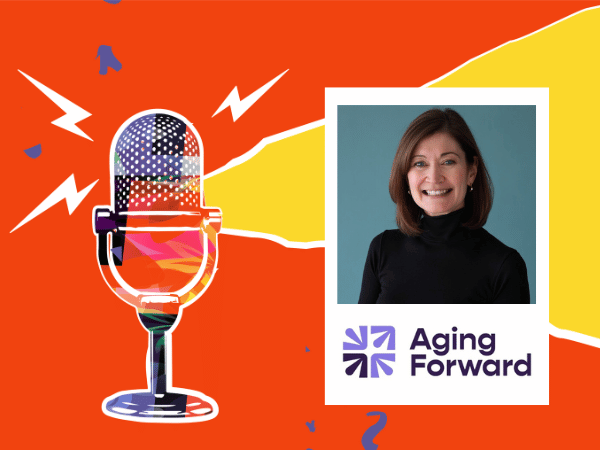
Retirement can be tough.
Not just for health or financial reasons, but because of what happens when your schedule completely opens up. How do you replace the ~8 hours a day you spent working?
Isolation can set in. Doomscrolling replaces family time. Loneliness is the quietest danger we don’t talk about enough, and Sarah Cheney has spent twenty years fighting against it.
As executive director of Aging Forward Alliance, Cheney helps older adults stay independent and connected through lifelong learning and community engagement. The national nonprofit provides rides to medical appointments and installs grab bars to prevent falls, but what really sets them apart is creating opportunities for purpose and belonging at a stage of life when both can easily slip away.
"I want to make aging something to celebrate and not something to fear," Cheney says.
Her path here was full of winding roads, of course. Twenty years ago, she was editing textbooks for grammar mistakes, and now, she’s in charge of an important nonprofit support organization.
From Board Member to Executive Director
"My job has always been more than just a paycheck," she explains. "But especially with nonprofit work, when you really see that you are changing lives and making a difference, it's just very rewarding."
She joined Aging Forward’s board in 2005. But at the time, the organization was on an unsteady footing. A beloved founder struggling to step away, a string of interim directors, and a well-respected leader suddenly moving away.
They needed continuity. Stability. And Cheney stepped in to be that person.
Little Things That Make a Big Difference
The services Aging Forward Alliance provides might seem small, but as Cheney puts it, they make “an extraordinary difference" in helping older adults stay in their own homes. They include:
- Rides to medical appointments
- Bathroom grab bars
- Help with chores
And, perhaps most importantly, they provide opportunities to be in community with fellow retirees.
People aren't living next door to their aging parents anymore. As families move for work and scatter to the wind, this support is more important than ever. And with nursing facilities facing staffing shortages, organizations like the Aging Forward Alliance are stepping up.
Navigating the Funding Landscape
Cheney knows that nonprofits need diversified revenue sources. So she leans into what she's good at, grant writing, and leans on others to make sure the organization isn't dependent on any one revenue stream.
Today they pull from grants, individual donors, and even an unexpected corporate partnership. During the pandemic, a startup approached them about donating a percentage of monthly proceeds. It seemed like an unusual fit at first, but Cheney said yes. As the company scaled, those contributions grew to $20,000 monthly.
"It turned out to be a perfect partnership," she says.
She also helps affiliates approach local governments for support. Their organization manages local hands-on support but also advises sister and cousin organizations to grow their own sources of financial support.
Her general recommendation?
Cheney advises sharing with county councils what you do, whom you serve, and what happens if you're not there. She reframes “lobbying” to be storytelling and noted several affiliates have gotten funded for expansions in this manner.
Advice for Fellow Executive Directors
After nearly two decades leading the organization, Cheney has some hard-won advice for other executive directors: learn to say no.
“I'm not good at saying no," she admits. She'll see that affiliates need advocacy training and immediately start planning workshops.
But she's getting better at it. "It's okay to say ‘Not now, maybe in three or six months.’" Balancing the big vision with what her small team can actually handle remains an ongoing challenge.
The other thing she's learned? Don't go it alone.
"We believe everybody has something to contribute," she says. "When we can pool our collective wisdom, then you can better do your job.”