![[current-page:title]](svg/facebook.svg)
![[current-page:title]](svg/linkedin.svg)
![[current-page:title]](svg/email.svg)
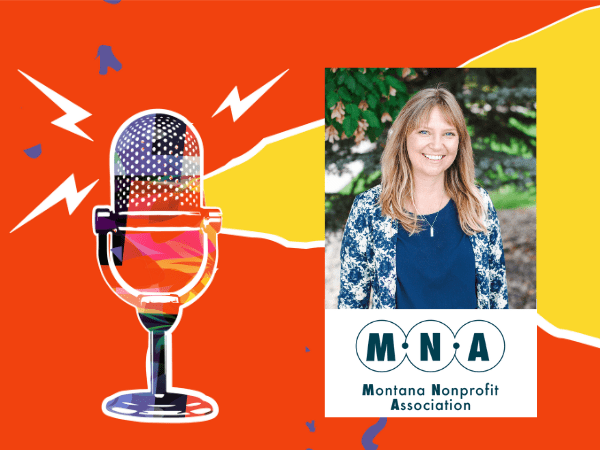
In a state as vast and rural as Montana, community resilience isn’t just an ideal—it’s a necessity. And for Shelby Rogala, Associate Director of the Montana Nonprofit Association (MNA), helping nonprofits stay connected, resourced, and empowered is more than a job. It’s a calling rooted in a love for place, people, and possibility.
For the past seven years, Shelby has been a driving force behind MNA’s programming, overseeing training, webinars, and statewide conferences that serve nonprofits of every shape and size. From tiny all-volunteer fire departments to large regional arts organizations, MNA supports the full spectrum of Montana’s nonprofit sector. And in a state with one of the highest numbers of nonprofits per capita in the country—a figure fueled by Montana’s rugged geography and deeply independent spirit—that’s no small feat.
“We believe that nonprofits contribute to the livability and high quality of life for all Montanans,” Shelby says. “Our job is to help them do their work to the highest level they can.”
That support comes in many forms. MNA offers policy advocacy at the state and federal levels, discounted products and services like background checks and insurance, and a robust membership network. But perhaps most importantly, MNA focuses on what Shelby calls “capacity building”—training, education, and connection for nonprofit professionals across the state.
Shelby’s own path to the nonprofit world was far from linear. After earning her degree, she spent four years as a ski instructor in Colorado and Chile, balancing slope time with freelance grant writing and community engagement. The contrast between the wealth of the recreation industry and the resource scarcity back home was quite formative.
“It just really highlighted how divorced that reality is from the reality of most people,” Shelby says. “Eventually, I got antsy to come home and contribute more meaningfully.”
Back in Montana, Shelby landed a role as a community outreach coordinator for her hometown school district, then joined MNA in a professional development role that perfectly blended her experience in adult education and grassroots organizing.
Today, as Associate Director, she’s particularly passionate about helping nonprofit leaders overcome the isolating challenges they face—especially in rural areas.
“The structure of nonprofit leadership can feel almost designed to be impossible,” Shelby says. “You have to raise money, prove impact, manage staff, answer to a volunteer board. It can feel really lonely.”
But, Shelby is quick to remind people that the work can still be joyful.
“We want to help leaders feel like they’re not alone,” Shelby says. “That they don’t have to be experts in everything. We can connect them to resources and to each other. Board meetings don’t have to suck. This work is about people, connection, and meaning.”
Two of the most innovative efforts Shelby and her team have led in recent years reflect that people-first approach. The first is a shift to “whole-organization pricing” for online trainings. Instead of charging per person, MNA charges a flat rate, allowing nonprofits to bring as many team members as they want—staff, volunteers, or board members.
“Learning doesn’t happen in a vacuum,” Shelby says. “The more people who hear the same message, the more likely it leads to real change.”
The second is MNA’s Ambassador Program, a bold reimagining of how rural capacity building should be funded. Instead of asking rural organizations to pay for training, MNA pays local leaders to serve as conveners and connectors within their communities.
“Rural America is deeply underfunded,” Shelby says. “There’s a resource gap and a lack of infrastructure. We realized that if we want to build capacity in those areas, we have to fund it. You can’t expect someone to do that work for free.”
This commitment to equity and accessibility isn’t just about operations—it’s about values. As Shelby puts it, “We all do better when we all have access to information.”
Right now, that mission is more urgent than ever. With federal funding uncertainties and increasingly polarized rhetoric attacking the legitimacy of nonprofits, the sector is facing what Shelby calls “an all-encompassing challenge.”
“It’s crucial that nonprofit leaders understand that their work is deeply valuable. And it’s just as important that the public recognizes the role nonprofits play in building strong, vibrant communities,” Shelby says. “If you’ve ever benefited from a food bank, a trail system, a domestic violence shelter, or a community arts program, you’ve benefited from a nonprofit.”
Her call to action is simple but clear: “If you’re someone who supports nonprofits—or is supported by them—now is the time to speak up. Share their value. Volunteer. Donate. Advocate. It matters more than ever.”