![[current-page:title]](svg/facebook.svg)
![[current-page:title]](svg/linkedin.svg)
![[current-page:title]](svg/email.svg)
Grant applications can feel like a black box. You pour time and energy into a project, write the best narrative you can, and hit submit. But weeks later, all you have to show is a polite rejection.
What went wrong?
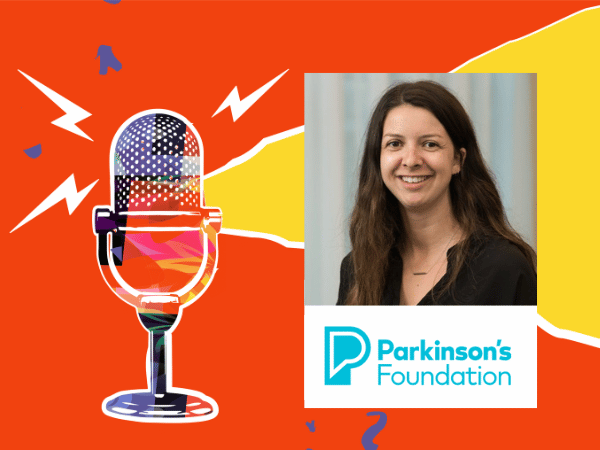
Alyssa Boyle understands the frustration. As grants manager for the Parkinson’s Foundation, she’s responsible for managing and reviewing hundreds of $10,000 to $25,000 grant applications per year. And she has a lot of difficult conversations with people she, unfortunately, has to decline to fund.
“There’s no perfect program, setup, or model,” Alyssa says. “And a lot of folks deserve the funding we give out, so it’s hard to say, ‘You and your community deserve this money. We just don’t have it this year.’”
It may be a relief to know you didn’t do anything wrong.
But it also raises a new question: even if there’s no perfect approach, how can you give yourself the best possible chance to succeed?
Meet Alyssa
When she finished her bachelor’s, her goal wasn’t to become a grants manager. She just wanted to find her place in the nonprofit world.
“I’ve always wanted to work in nonprofits. My first job was at a women’s shelter, and I was lucky enough to get to see a little bit of everything a nonprofit does. Then I had the opportunity to move into an administrative role supporting the Parkinson’s Foundation CEO, and finally moved into managing grants.”
Today, she sits across the table from grant seekers, helping fund anything from exercise classes to support groups and, of course, research.
“Applications don’t have to be earth-shattering. You don’t have to be finding the cure to Parkinson’s. It can be as simple as helping the community with something they really need.”
An Inside Look at the Review Process
All her foundation’s grant applications get reviewed on multiple levels.
“It’s not just me. We have a board that helps, pulling in volunteer caregivers or people living with Parkinson’s who really understand the needs of the community.”
And during our conversation, she revealed the value of a compelling story.
“There’s a community support group we’re funding right now. The organizer has a full-time job and was volunteering her time to facilitate the program. It’s a little bit smaller scale, but she was doing this out of the kindness of her heart, and we were able to send some money and give her a little break.”
Alyssa shared that, aside from a handful of programs that are automatically ineligible, they don’t look for anything specific. Every case is different, and as long as your methods can genuinely support the community, you have a shot at receiving funding.
Strengthening Applications
Finding grant funding, in many ways, is a numbers game.
It’s why Hannah Wiginton invented a tool to keep up with application deadlines, and Patrice Davis trains nonprofit leaders to keep the funding they’ve secured with better post-award management.
However, there are still ways to improve the effectiveness of your approach.
- Focus on the Funder: The Parkinson’s Foundation includes reviews from caregivers as well as people with lived experience battling the disease. Keep their perspectives in mind as you write.
- Establish Credibility: Alyssa shared that, in many cases, grantees are people already connected to their foundation. But if you’re applying somewhere new, you won’t have the luxury of familiarity. Your application, and digital presence, need to position you as a trustworthy and qualified steward of an organization’s funding.
- Outcome Evaluation Matters: Some reviewers will be outside volunteers, but you can be sure at least one internal grantmaking employee will be finance-minded. It’s important to have a plan for measuring impact.
- Be Persistent: Some years, the money simply won’t be there. But professionals, like Alyssa, can stay in their roles for many years. They’ll remember you during the next application cycle, and that familiarity could be a difference maker.
A Final Word of Advice From Alyssa
Beyond the application process, Boyle has one more thing to share.
“It sounds cliché, but there’s a lot of burnout in nonprofits. When I’m having those moments, getting caught up in the frustrations of the day-to-day, I may not see the tangible results of what I’m doing. So when I have the opportunity to talk to the community I serve, I take it, because it’s a reminder of why I’m doing this work.”
Want to learn more?
We’re hosting a live webinar on October 16th, all about what grantmakers look for in your finances.
And if you’re unavailable to attend, check out our webinar schedule. Our experts host weekly events designed to simplify your funding search and achieve your impact.